
Who owes you,
down to the kobo.
Storvey puts an AI agent on your WhatsApp line to take orders while you sleep, and turns your notebook into a live dashboard of stock, orders, and receivables you can actually trust.
Free during the pilot · No card required · Your customers never install anything
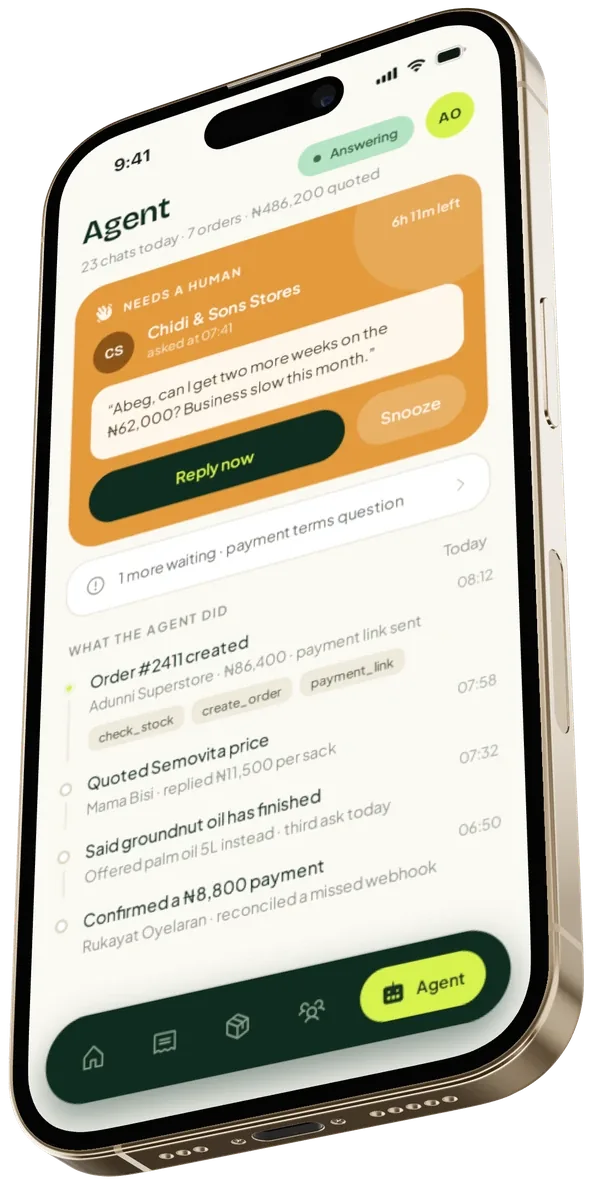
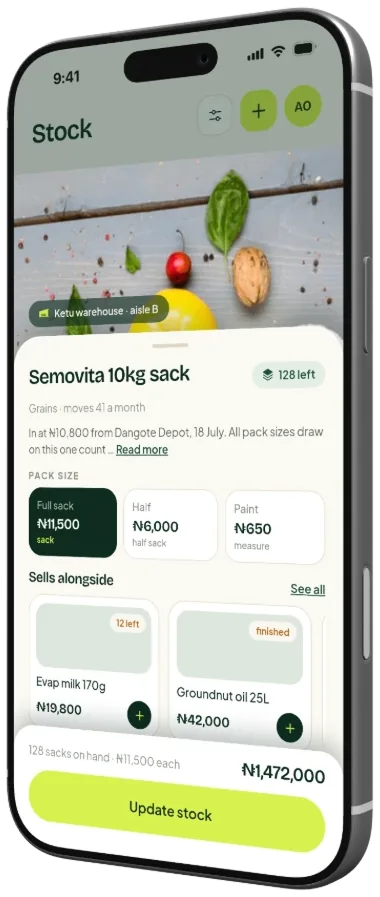
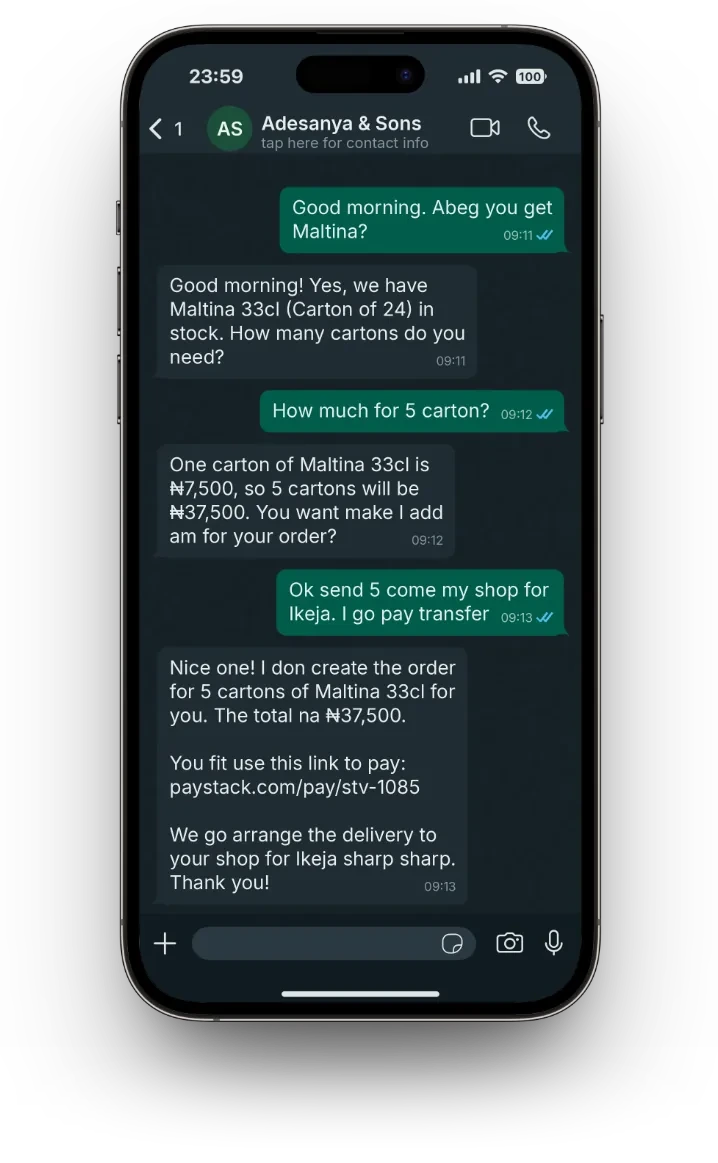
Your customer never
leaves WhatsApp
No staff typed any of this. The agent checked real stock, real prices, and logged the order to the dashboard.
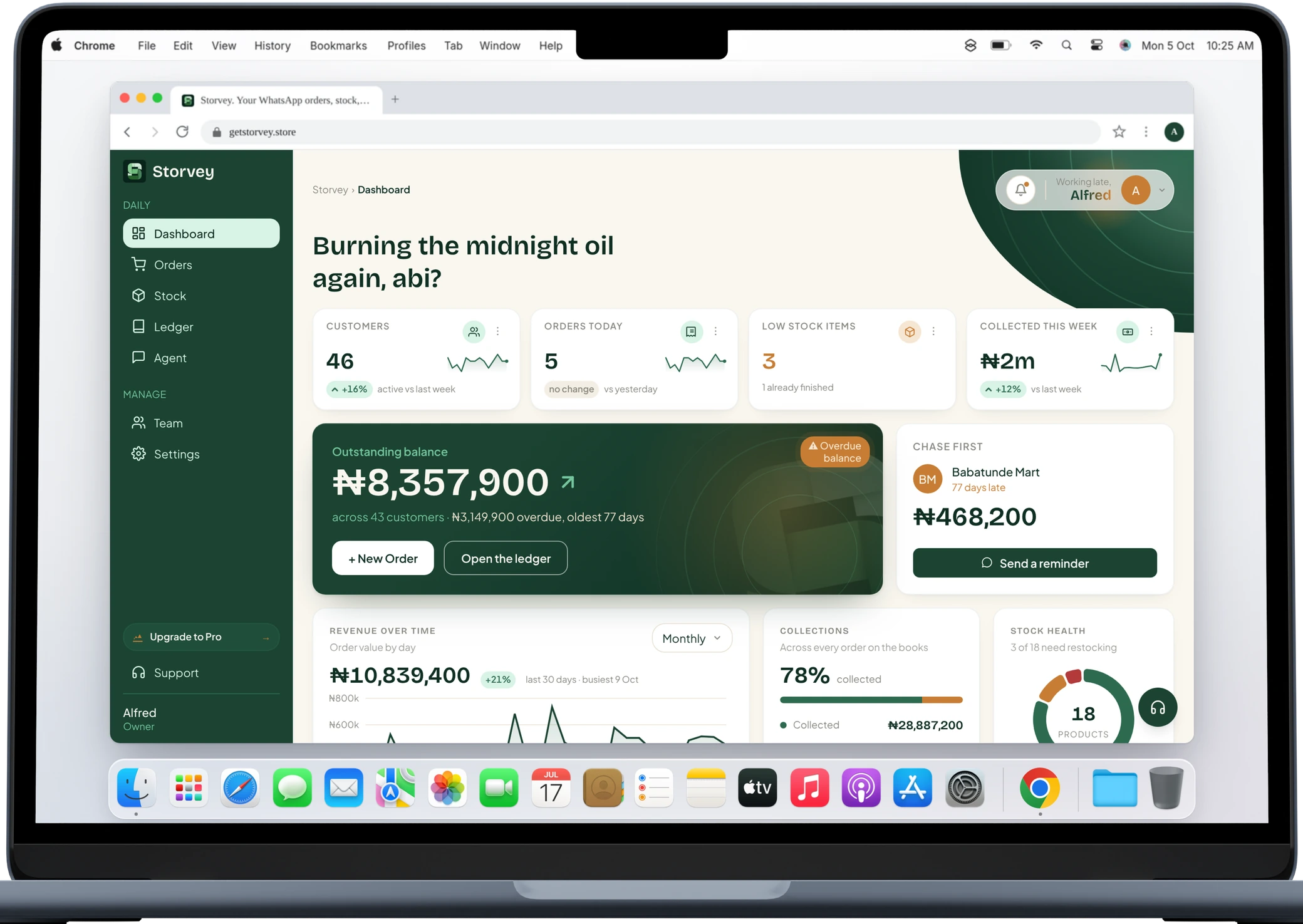
The same books, on the laptop and in your pocket
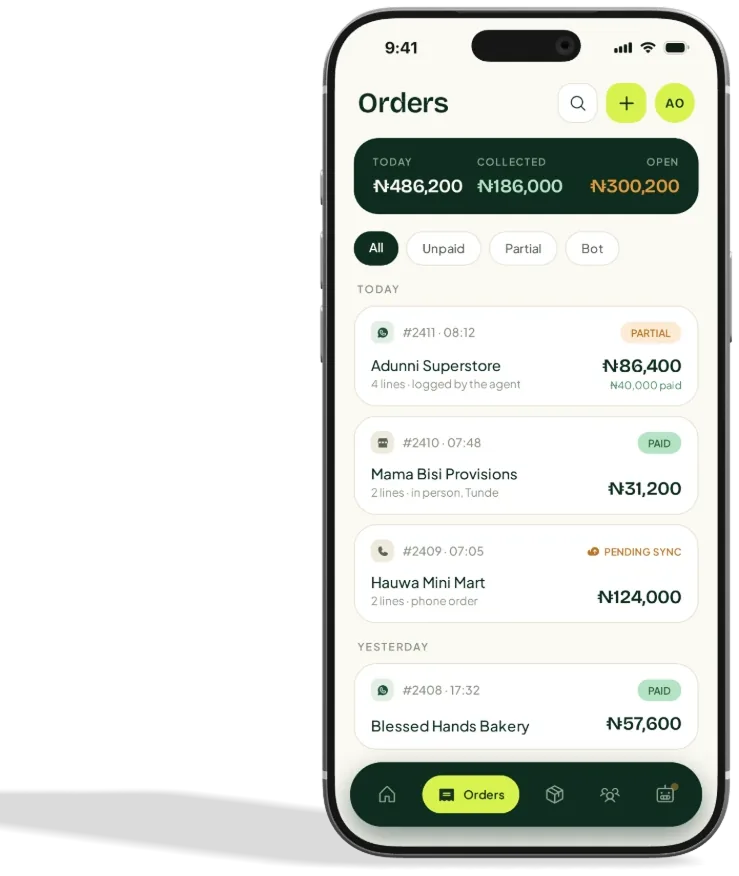
Open it on the shop computer or check a balance from the market. One ledger, updating live, wherever you are standing.
Run the business, not the paperwork
Everything a distributor juggles across chats, notebooks, and memory, all in one calm place.
Know who owes you
The ledger leads with outstanding balances, aged into 0 to 30, 31 to 60, and 61+ day buckets, so the money you need to chase is never a mystery.
An agent that takes orders
Your customers already order on WhatsApp. Storvey's AI answers them in English or Pidgin, checks live stock and prices, and books the order, day or night.
Stock that can't lie
Every order, whether WhatsApp, phone, or walk-in, moves stock atomically. Low-stock alerts fire before you sell what you don't have.
Get paid faster
Every confirmed order can carry a Paystack link, settled straight into your own bank account. Partial payments and running balances handled properly.

Your customers are
somewhere in here.
Multiple shops, Multiple chats, one notebook that goes home in a bag. Storvey answers on the line they already message, prices the order off the stock you actually have, and puts every kobo against the right name before you have put the phone down.
- tools the agent can call
- 10tools the agent can call
- languages, English and Pidgin
- 2languages, English and Pidgin
- apps your customer installs
- 0apps your customer installs
From “abeg you get…?” to money in the bank
Four steps. Only the first one is yours.
Sign in once, with your phone number
A code by SMS and you are in. No forms, no paperwork, nothing to install for your customers. Email and password is there too, for the days the network is not.
Takes about a minute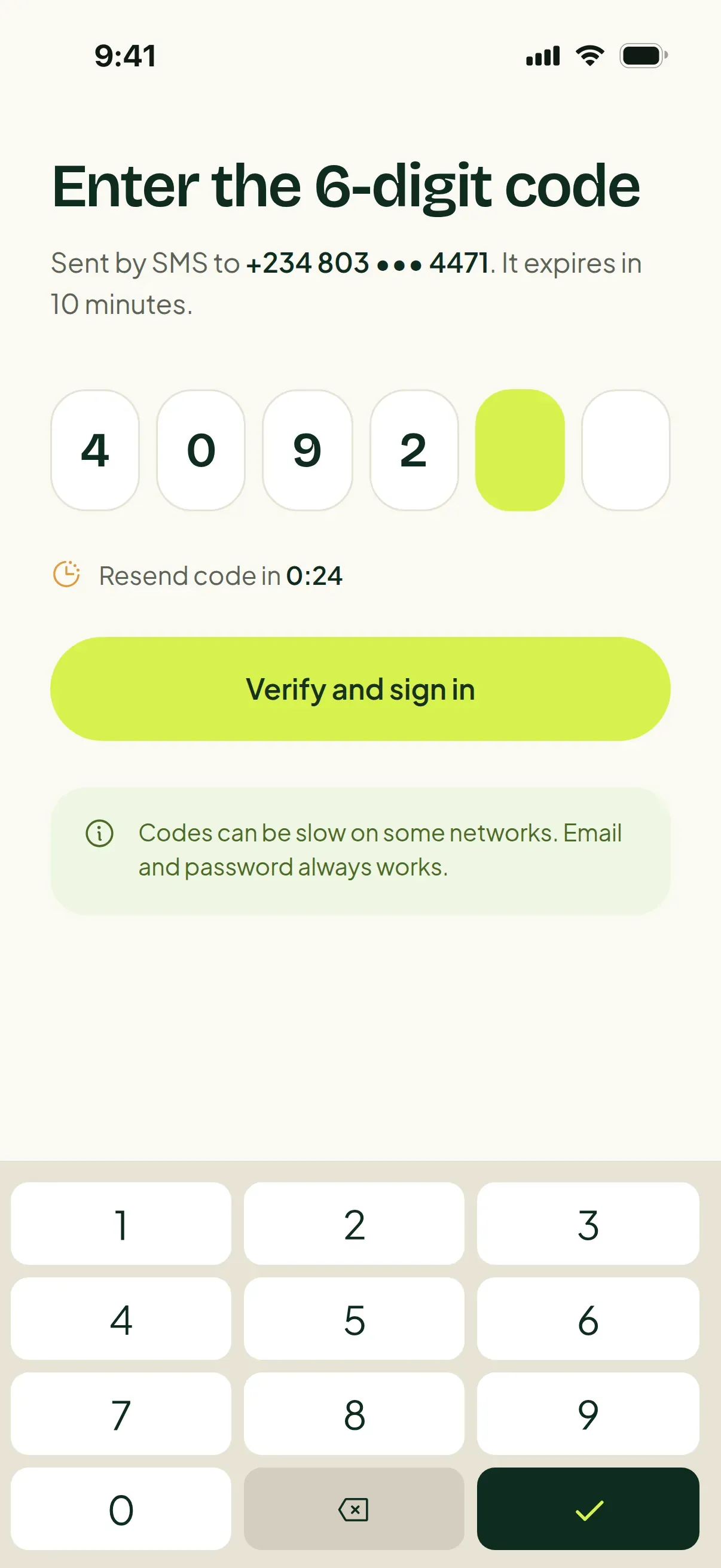
Customers text your number
Nothing changes for them. Same WhatsApp, same number they already know. No app to download, no account to create.
Nothing for them to install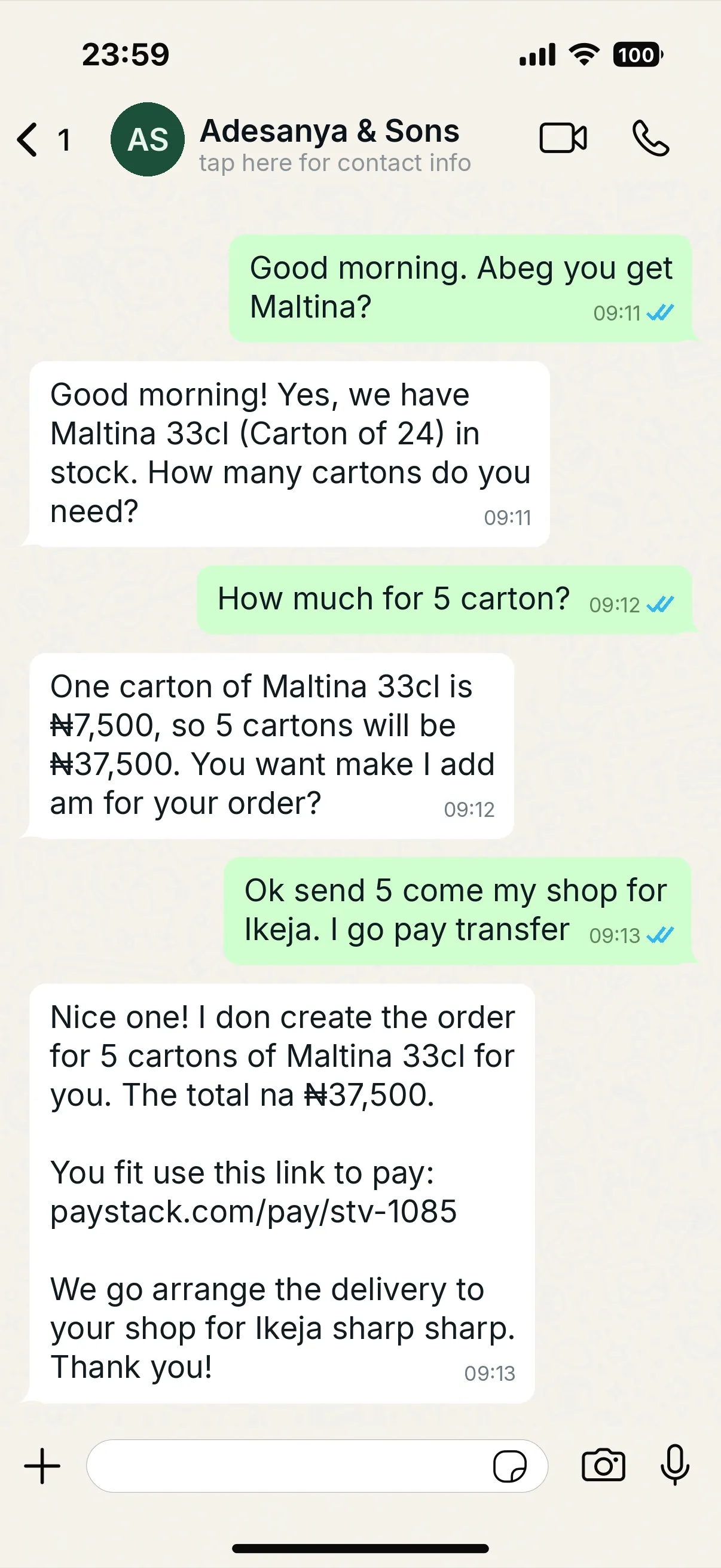
The agent does the work
It answers stock and price questions from your real inventory, takes the order, applies your delivery fees, and sends a payment link.
English or Pidgin, day or night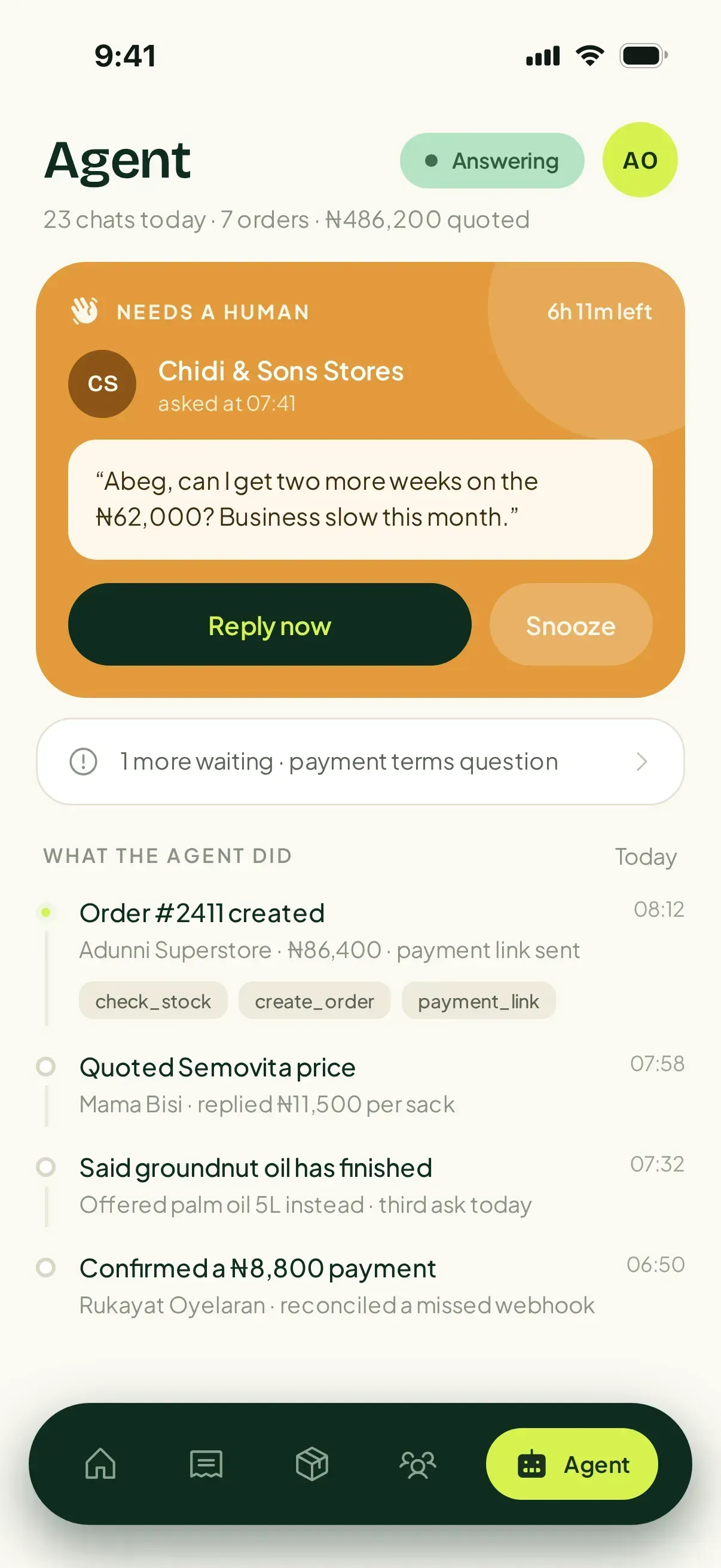
Your books write themselves
Orders, stock movements, and balances land in your dashboard in real time. Complaints and special requests get handed to you, never guessed at.
Live, nothing to refresh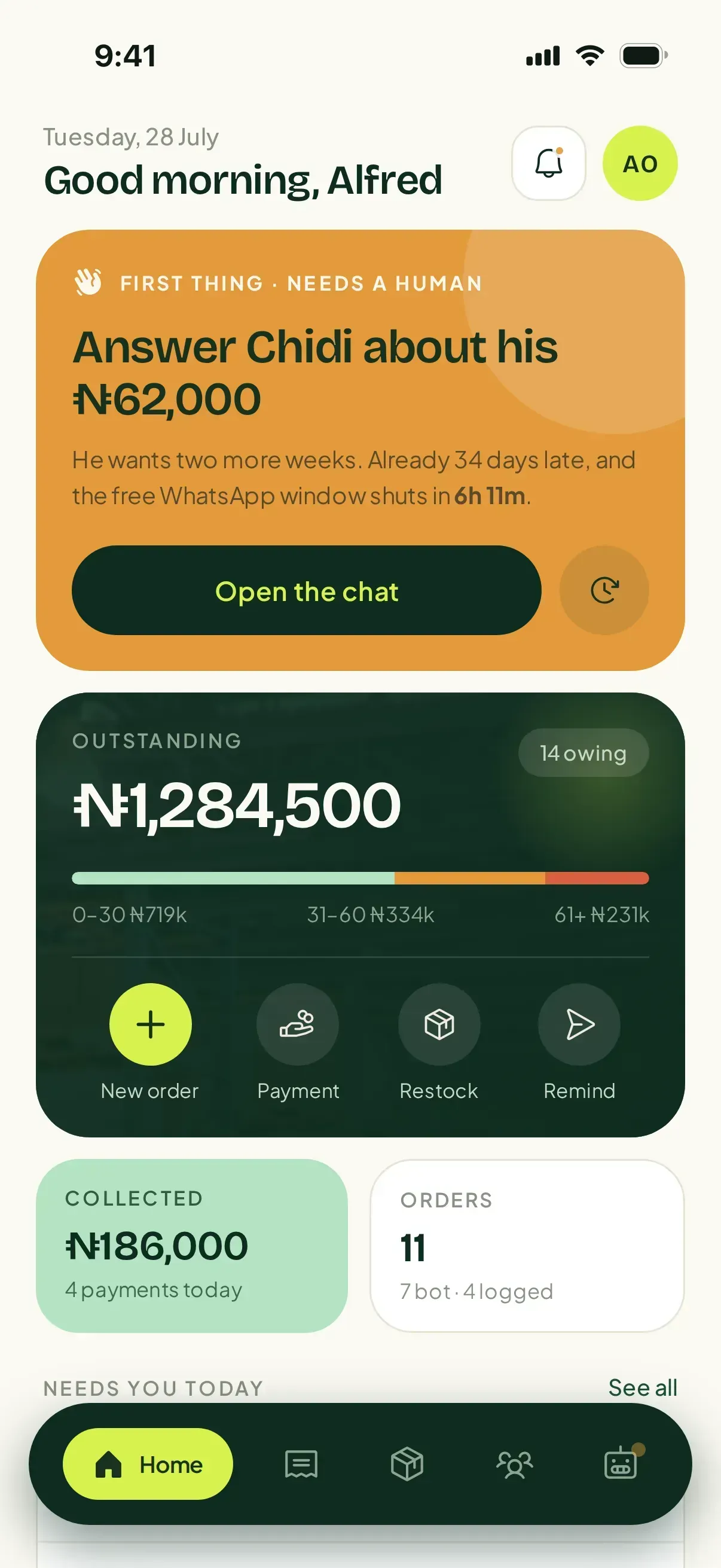

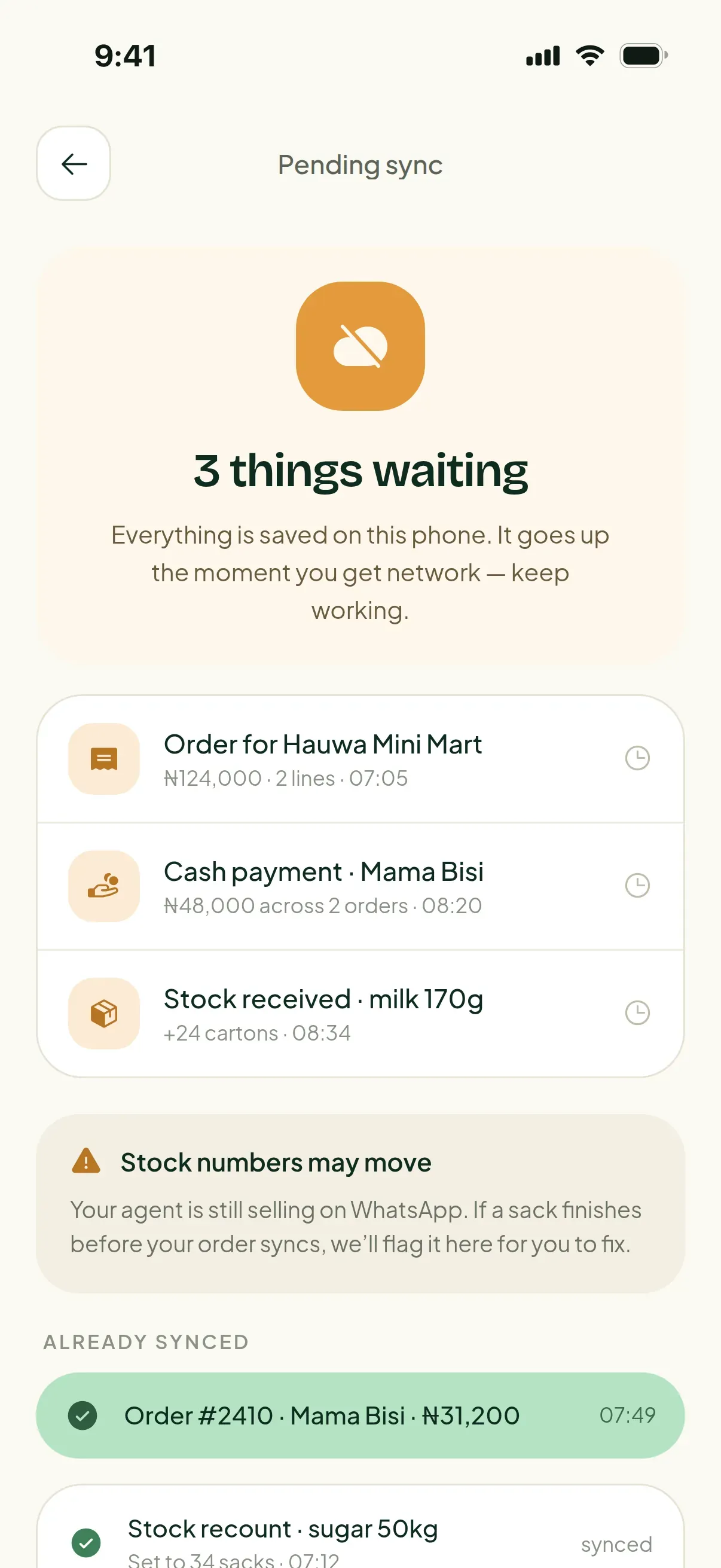
The network will drop.
The work should not.
The mobile experience is designed to preserve work locally and show what still needs to sync. Durable retry and conflict recovery are launch gates, not promises we will make before they pass.
Local work is preserved
The mobile foundation preserves on-device work. Durable cloud sync and conflict recovery are being completed before the real pilot.
A visible sync queue
Pending actions stay visible instead of pretending they reached the cloud. Pilot launch depends on restart and retry tests passing.
Warned, not surprised
The agent runs in the cloud while a handset is offline. The app is designed to warn when its local stock view may be stale.

Everyone opens the same app to a different screen
Your sales rep should not see the business balance. Your warehouse hand should not see prices. They do not, because the database enforces it, so it holds even if someone goes looking.
Opens on the money: who owes you, what came in today, and the one customer who needs answering before anything else.
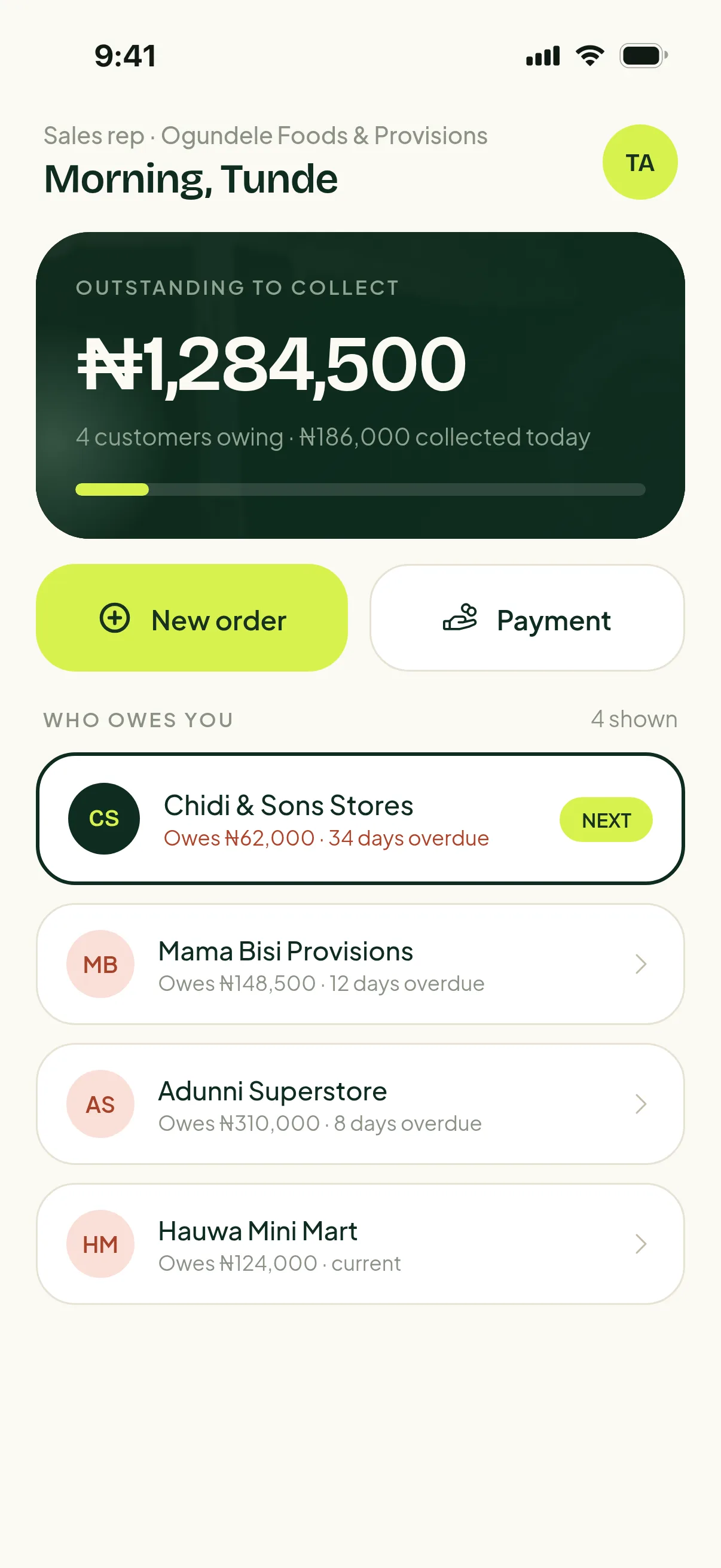
Opens on the collecting: who owes, how late they are, and the payments taken today. The team page is the owner's, not theirs.
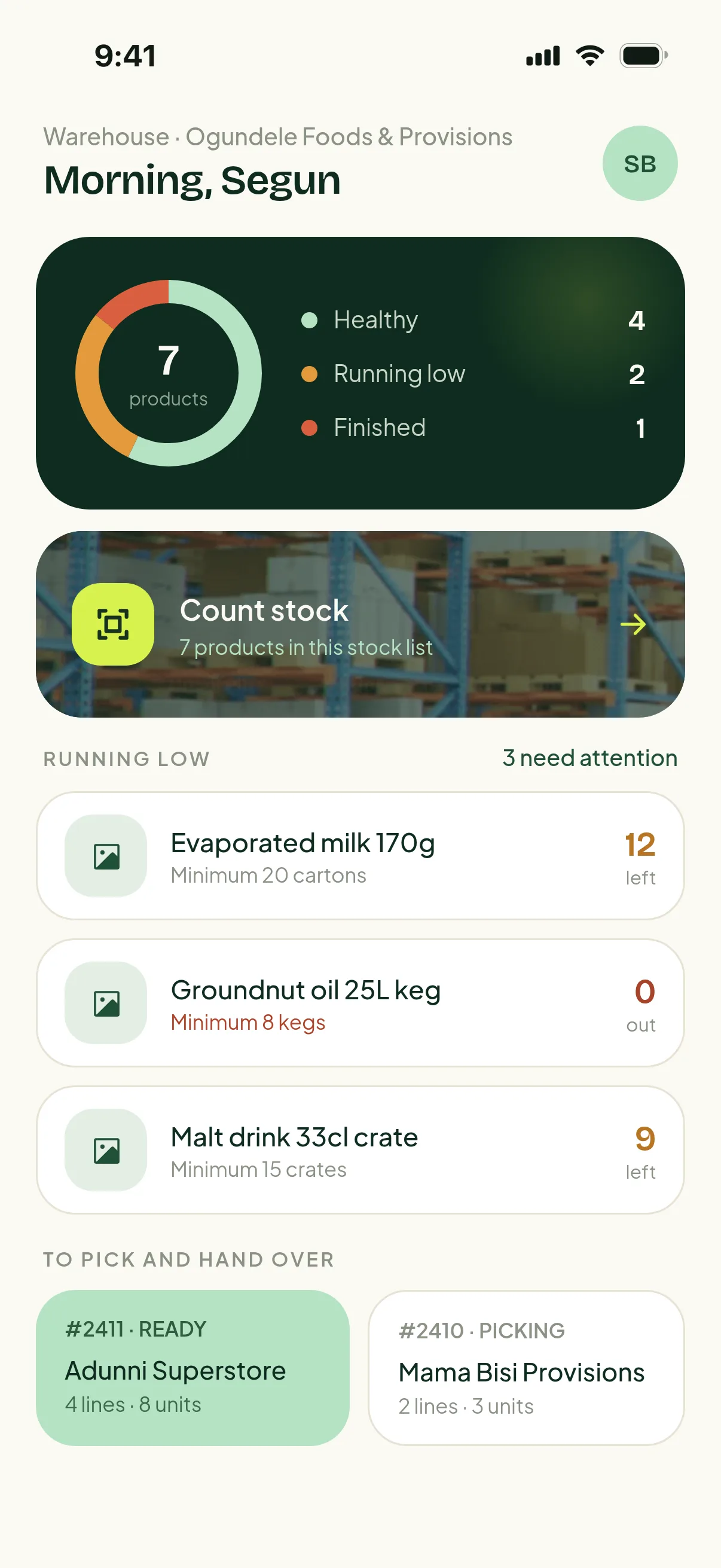
Opens on the work: what to pick, what to receive, what is running low. No balances, no prices, no customer money.
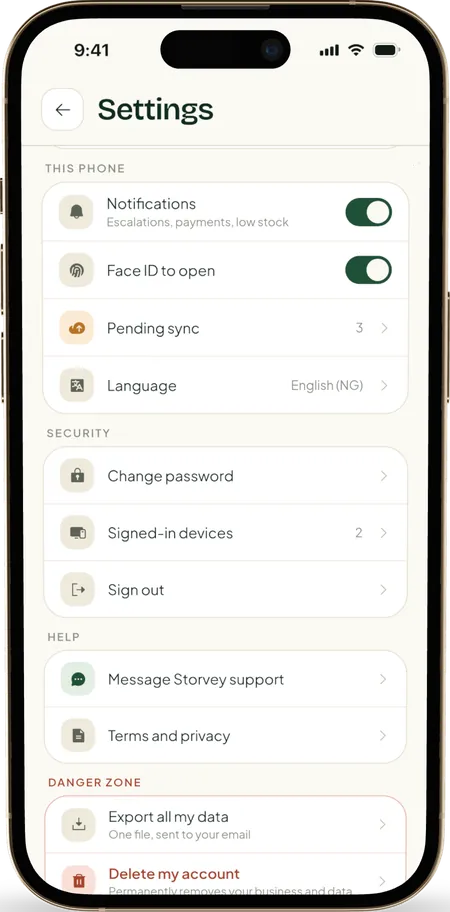
Your numbers, locked like your banking app
Outstanding balances and customer data are not something to leave sitting open in a bag or on a counter. Storvey asks for your face before it shows a kobo.
Face ID to open
The app locks itself the moment it closes. No PIN to type, no shoulder-surfing.
Role-based access
Owners see the money. Warehouse staff see stock. The database enforces it, not just the screen.
Signed-in devices
See every device on your account and sign one out the moment it stops being yours.
The ledger is free. The agent is not
Nothing is crippled to push you upwards. The free plan gives away everything that costs us nothing to run, and the paid plans sell the one thing that does: an AI answering your customers all day.
Free
Your notebook, digital.
₦0forever
- One user, the owner
- Up to 40 customers and 40 products
- Unlimited orders entered by hand
- The ledger: who owes what, with ageing buckets
- Stock levels and low-stock alerts
- The mobile app
- 90 days of order history
- Reminders as a WhatsApp draft you send yourself
The agent tab is there, showing a worked example on your own products, with one control to turn it on.
Start freeStarter
The agent answers.
₦7,000a month
- Everything in Free, with the customer and product caps removed
- The WhatsApp agent answers stock, price and delivery questions
- It takes the order and sends a payment link
- Two staff seats
- Full order history
- A fair-use ceiling on agent conversations, with warning before you reach it
This is the same agent as the plan above it. What changes higher up is how much of it you get.
Join the waitlistBusiness
The whole desk.
₦15,000a month
- Everything in Starter
- No conversation ceiling under fair use
- Unlimited staff seats
- The agent sends payment reminders on its own
- Priority support
Reminders sit here because every one carries a delivery charge from Meta, so they belong in the plan that pays for them.
Join the waitlistPilot businesses pay nothing while we build this with them, and they will hear the price from us before anyone else. Prices are in naira, billed monthly, and you can leave whenever you want.
Before you hand over your line
The questions everyone asks, answered straight.
Do my customers need to download anything?
No. They message the same WhatsApp number they always have, and the agent answers there. Nothing to install, no account, no link to click before they can order.
Does it speak Pidgin?
Yes. English and Nigerian Pidgin, and it replies in whichever one the customer used. It quotes from your live stock and your own prices, so it cannot promise a carton you do not have.
What happens when the agent is not sure?
It hands the chat to you instead of guessing. Complaints, credit requests, unusual discounts and anything it cannot match to a product land in your escalations, with the conversation attached so you are not starting cold.
Can my staff see how much the business is making?
Only if you are the owner. Sales reps work with customers, orders and payments. Warehouse staff see what to pick and pack, but receive no prices, balances or totals. Those boundaries are enforced in the database, not just hidden on screen.
What if I lose my phone?
Your business records live in your Storvey account rather than only on one handset. You can sign out a lost device by revoking its session; biometric app-lock and device management are being verified before the mobile store release.
What does it cost?
There is a free plan that keeps your ledger, your stock and your customers, for one owner, up to 40 customers and 40 products. The WhatsApp agent starts at ₦7,000 a month, and ₦15,000 adds unlimited staff and lets the agent chase payments for you. Pilot businesses pay nothing while we build it with them.
Your notebook has done its best.
Join the pilot and put Storvey on your WhatsApp line. Real orders, real stock, real balances, from day one.
No card. No install for your customers. We open the pilot in batches.